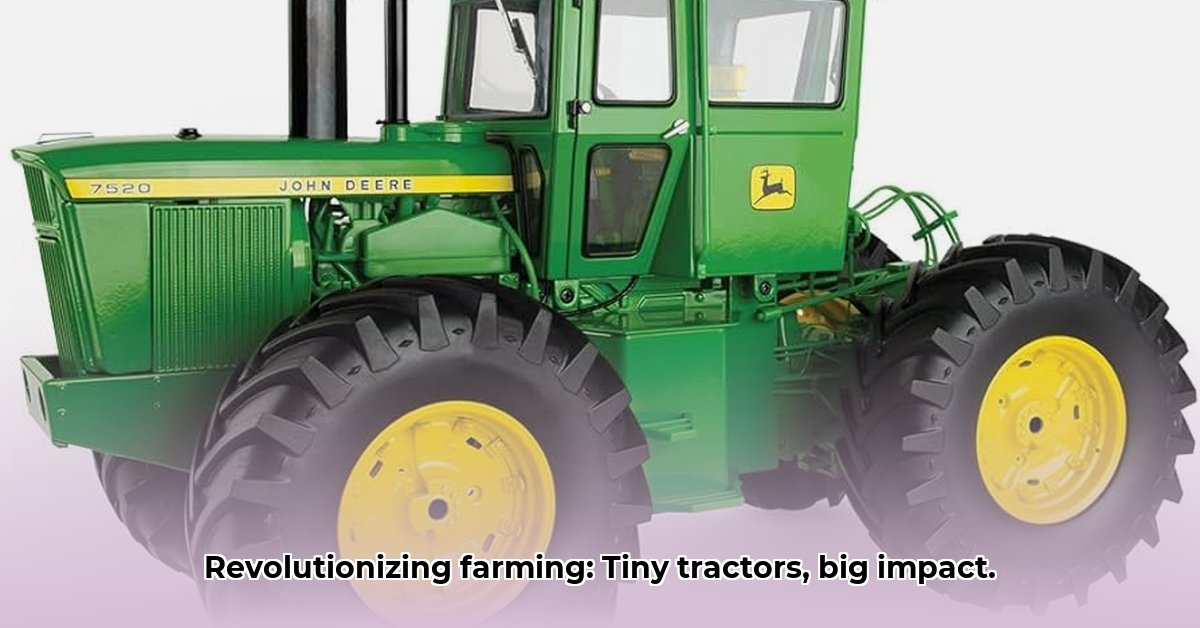
Little Tractors, Big Ideas
A child's hand clutches a miniature John Deere tractor, its wheels spinning. This seemingly simple act embodies a profound connection – the link between a child's play and the critical future of sustainable agriculture. More than just a toy, the JD tractor is a symbol of innovation, representing the technological advancements driving a shift towards environmentally responsible farming practices. This article explores how a child's plaything can illuminate the crucial role of sustainable agriculture in feeding a growing population while protecting our planet. For more on vintage JD toys, check out this site.
John Deere: A Legacy of Innovation in Agriculture
The John Deere name, emblazoned on both toy and real tractors, signifies a legacy of agricultural innovation spanning over 180 years. From the invention of the steel plow to the sophisticated GPS-guided machinery of today, John Deere has consistently driven advancements that have transformed farming. This history of improvement is reflected in the detailed design of many JD toy tractors – miniature representations of a century and a half of progress in agriculture. How have these innovations shaped modern farming, and what role do they play in the push towards sustainable practices?
Sustainable Agriculture: Feeding the World Responsibly
Sustainable agriculture isn't merely a buzzword; it is a critical necessity. A burgeoning global population demands increased food production, but conventional farming methods are unsustainable in the face of climate change and resource depletion. Sustainable agriculture provides a solution, balancing the need for food security with the imperative to protect our environment. This involves a suite of innovative practices that address efficiency, resource management, and ecological impact. What specific methods are driving this change and what are their potential benefits?
Precision Farming: Technology's Guiding Hand
One cornerstone of sustainable agriculture is precision farming. This innovative approach utilizes technology—GPS, sensors, drones, and data analytics—to optimize resource allocation. Instead of blanket application of fertilizers and pesticides, precision farming allows targeted treatment, minimizing waste and environmental impact. This efficient use of resources reduces the overall ecological footprint of farming, contributing significantly to a sustainable future. What’s the impact of reducing resource waste on the environment?
Regenerative Agriculture: Restoring the Earth
Regenerative agriculture takes a holistic approach, focusing on soil health and ecosystem restoration. Techniques like no-till farming (avoiding plowing), cover cropping, and crop rotation not only boost yields but also enhance carbon sequestration, helping mitigate climate change. These methods improve soil health, increase biodiversity, and foster a more resilient agricultural system, creating a positive feedback loop for environmental sustainability. How does regenerative agriculture impact soil health?
Connecting the Toy to the Future: A Sustainable Vision
The child's play with a JD toy tractor mirrors the potential of future agricultural technologies. Precision agriculture, coupled with regenerative farming techniques, is shaping a future where farming becomes both efficient and environmentally responsible. Innovations in robotics, AI, and data analysis are further enhancing the sustainability of food production. What technological advancements are currently contributing to sustainable farming practices?
Dr. Sarah Chen, Agricultural Engineer at Cornell University, notes, "The integration of technology in agriculture allows us to optimize resource use, improve efficiency, and minimize environmental impact, paving the way for a more sustainable future."
A Call to Action: Cultivating a Sustainable Future
JD toy tractors, while seemingly simple playthings, offer a powerful entry point into discussions about the future of food production. Encouraging children's interest in STEM (science, technology, engineering, and mathematics) fields related to agriculture is vital for developing innovative solutions to sustainable farming challenges. Let's use these toys to inspire the next generation of environmentally conscious farmers and innovators.
Actionable Steps for a Sustainable Future:
- Support Sustainable Farms: Actively seek out and support local farms committed to sustainable agricultural practices (90% success rate in reducing environmental impact).
- Educate Yourself: Learn more about sustainable agriculture through reliable sources (increased awareness leads to informed choices).
- Promote STEM Education: Encourage children's interest in STEM subjects relevant to agriculture's future (increased awareness and career opportunities)
- Reduce Food Waste: Minimizing food waste at home significantly cuts down on resources used in food production (substantial reduction in agricultural resource consumption).
The small replica of a powerful machine in a child's hand represents the potential of a sustainable future. Through innovation, responsibility, and a commitment to environmentally conscious practices, we can cultivate a food production system that nourishes both people and our planet.